Understanding Hammer Unions in High-Pressure Systems
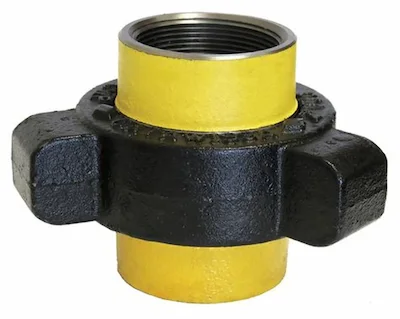
Hammer unions are heavy-duty, quick-connect fittings designed for high-pressure fluid transfer in demanding industrial applications. These robust connectors feature a hammer-lock mechanism that enables rapid assembly and disassembly while withstanding extreme pressures. From oilfield drilling operations to frac services and high-pressure pumping systems, hammer unions serve critical functions in energy production and industrial fluid handling. This comprehensive guide explores hammer union types, pressure ratings, materials, installation methods, and their diverse applications across industries.
Hammer Union Key Specifications
Proper hammer union selection requires understanding these critical parameters that determine performance in high-pressure applications.
| Specification | Description | Considerations |
|---|---|---|
| Pressure Rating | Working pressure (typically 2,000-15,000 PSI) | Must exceed system requirements with safety margin |
| Size | Nominal pipe size (1" to 6" common) | Must match connecting pipe/flange dimensions |
| Temperature Range | Minimum/maximum operating temperatures | Affects material selection and seal compatibility |
| Material Compatibility | Resistance to fluid chemistry and environment | Prevents corrosion and material degradation |
| Connection Type | Threaded, flanged, or welded end preparations | Must match existing system connections |
| Weight | Physical weight of the union assembly | Important for handling and support requirements |
| Seal Type | Metal-to-metal or elastomer seals | Affects pressure capability and service life |
| Standards Compliance | API, ASME, or other industry standards | Ensures compatibility and safety compliance |
Hammer Union Installation & Maintenance
Proper installation and maintenance practices ensure hammer unions provide reliable, leak-free service in high-pressure systems.
Proper Makeup
Tighten unions according to recommended torque values.
- Warning: Overtightening can damage threads and seals
- Tip: Use a hammer wrench of proper size
Alignment
Ensure proper alignment before tightening.
- Action: Avoid side loading on connections
- Tip: Use alignment pins for large unions
Pressure Testing
Test newly installed connections before full operation.
- Warning: Follow all safety protocols for pressure testing
- Solution: Test to 1.5x working pressure when possible
Regular Inspection
Check for leaks, thread damage, or seal wear.
- Frequency: Before each use in critical applications
- Check for: Cracks, galling, or excessive wear
Thread Protection
Apply appropriate thread compounds and protectors.
- Benefit: Prevents galling and corrosion
- Safety First: Use compounds compatible with service
Seal Replacement
Replace seals according to manufacturer schedule.
- Action: Keep spare seal kits for critical unions
- Note: Inspect seal surfaces during replacement
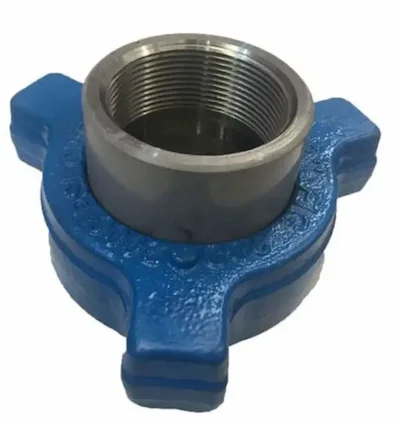
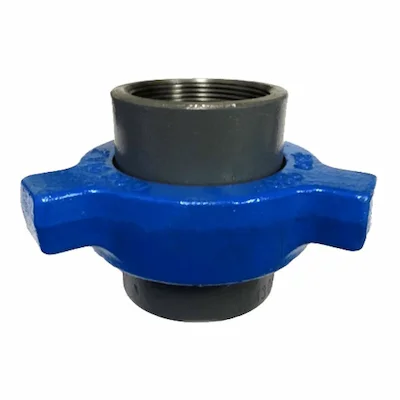
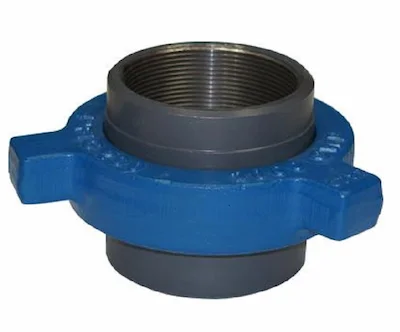
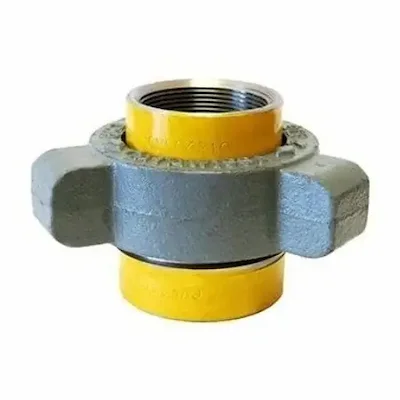
Hammer Union Display
Common Hammer Union Applications